History · Bald Eagle Valley

A valley built on charcoal iron

Julian is named for a furnace. Curtin Village kept one burning until 1921. The story is on the ground, a short drive apart.

Start here

Places

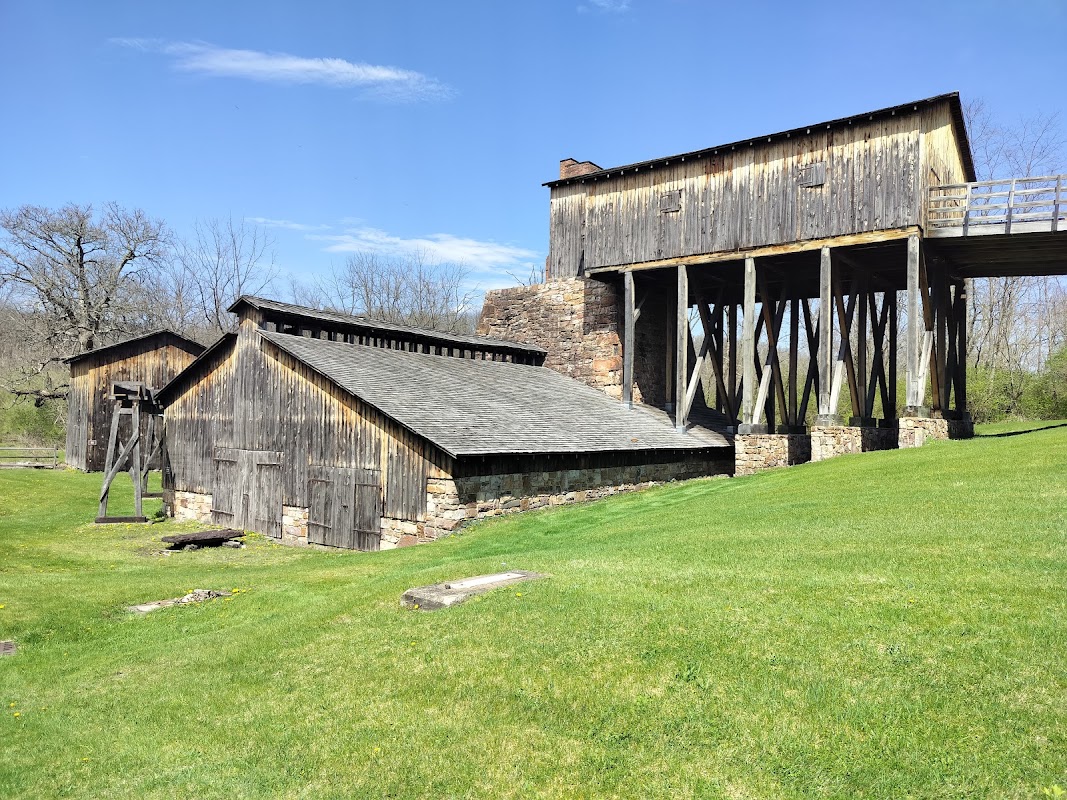
Eagle Iron Works & Curtin Village

Eagle Iron Works & Curtin Village

History & Heritage · Milesburg & Bellefonte

Roland Curtin's 1810 forge and 1818 cold-blast charcoal furnace on Bald Eagle Creek — one of the last charcoal furnaces to operate in the US (closed 1921). Restored furnace, 1830 mansion, worker's cabin. State-owned historic site.

Museums & HistoryHistoric Sites

Juliana Furnace Site (Julian's namesake)

History & Heritage · Julian & the upper valley

Julian began as Juliana Furnace, the charcoal iron furnace built by James Irvin and John Adams and named for Julia Ann — part of the Juniata iron district that also produced Eagle Iron Works, Harmony Forge, and Pennsylvania Furnace. Ore was hauled by teamsters from Buffalo Run Valley; 50–100 men worked the furnace and coaling grounds. VERIFY stack remains / marker location with Centre County Historical Society.

Museums & HistoryHistoric Sites

Questions people ask

How did Julian, Pennsylvania get its name?
From an iron furnace. The village began as Juliana Furnace, a charcoal iron furnace built by James Irvin and John Adams and named for Julia Ann. It was part of the Juniata iron district, and between 50 and 100 men worked the furnace and its coaling grounds, with ore hauled over by teamsters from the Buffalo Run Valley.
What is Curtin Village?
Eagle Iron Works and Curtin Village, on Bald Eagle Creek near Julian, Pennsylvania, is Roland Curtin’s 1810 forge and 1818 cold-blast charcoal furnace — one of the last charcoal furnaces to operate anywhere in the United States, closing in 1921. The state-owned site has the restored furnace, the 1830 mansion and a worker’s cabin.
Can you visit the iron furnaces near Julian, Pennsylvania?
Yes. The grounds at Curtin Village are open dawn to dusk year-round and guided tours run seasonally; park in the visitor lot between the Curtin Mansion and the railroad tracks on Curtin Village Road and walk to the furnace, mansion and workers’ cabins from there.
Why was there so much iron-making in the Bald Eagle Valley?
The valley had all four ingredients in one place: iron ore, limestone, water power on Bald Eagle and Spring Creeks, and enough hardwood forest to burn into charcoal. That combination produced Juliana Furnace, Eagle Iron Works, Harmony Forge and Pennsylvania Furnace within the Juniata iron district.
What was Harmony Forge?
A 1795 forge on Spring Creek near Milesburg, part of the same Juniata iron district as Julian, Pennsylvania’s Juliana Furnace. The site is now Harmony Forge Inn, a bed and breakfast and wedding venue — iron-heritage lodging on the original ground.
Powered by WanderExplore Julian — Julian, Pennsylvania (Bald Eagle Valley, Centre County). Not affiliated with Julian, California.Every place on this site is a pin on the Explore Julian map — interactive map by Wander.Written by residents. Facts carry sources; unverified access notes are labeled.llms.txt · Sitemap

